Products / Diamond & CBN Tools / Diamond Dressing Tools

DIAMOND DRESSING TOOLS
Single-Point Diamond Grinding Wheel Dresser
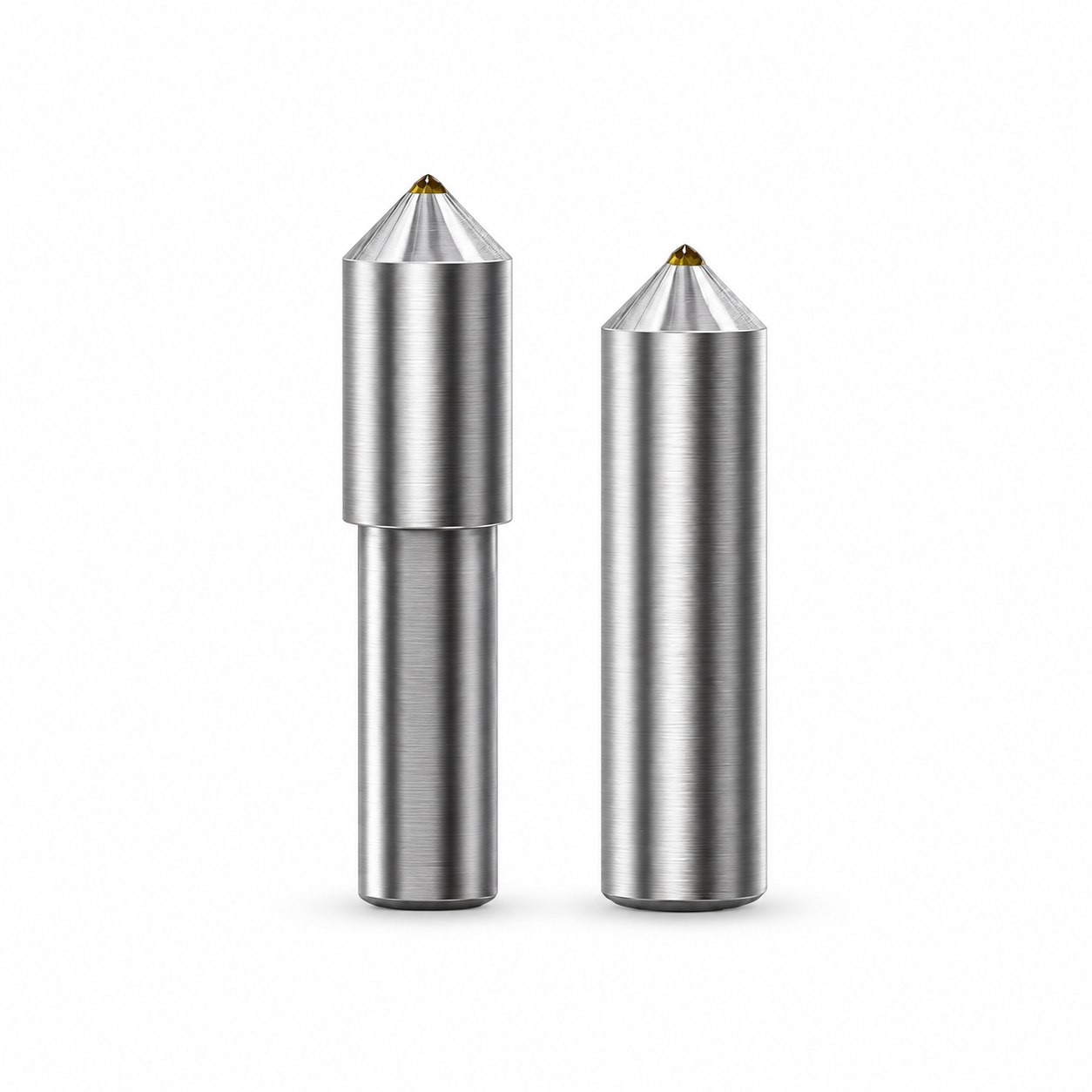
A replaceable, rigidly mounted diamond-point tool for truing and conditioning conventional grinding wheels. Straight and stepped shank options support different dresser holders and machine clearances.
50 mm listed overall length · Straight and stepped holders · For wheels up to 600 mm as listed
Product Overview
A single-point diamond dresser removes a controlled layer from the grinding-wheel face. This restores concentricity, corrects wheel geometry, exposes fresh abrasive and opens the wheel surface after loading or glazing. The tool acts on the grinding wheel; it is not used to grind the production workpiece.
The illustrated family combines a metal holder with one exposed diamond tip. Final suitability depends on wheel abrasive, bond, diameter, grit, profile, dresser holder and operating conditions. It should not be assumed suitable for diamond or CBN wheels without an application review.
Key Product Features
- Single exposed diamond point for localized wheel contact
- Straight and stepped holder geometries
- Rigid cylindrical metal body for secure clamping
- For truing, conditioning and restoring the wheel face
- Several source-listed holder diameters
- Custom dimensions available subject to technical confirmation
Source-Listed Specifications
The values below are taken from the supplied product material. Dimensions are listed references rather than a universal configuration; confirm the final drawing before ordering.
| Item | Listed Reference | Order Note |
|---|---|---|
| Product type | Single-point diamond grinding-wheel dresser | Confirmed |
| Holder styles | Straight shank and stepped shank | Confirmed from supplied images |
| Overall length | Approximately 50 mm | Confirm by drawing |
| Straight-shank diameters | 6, 8, 10 and 12 mm | Source-listed options |
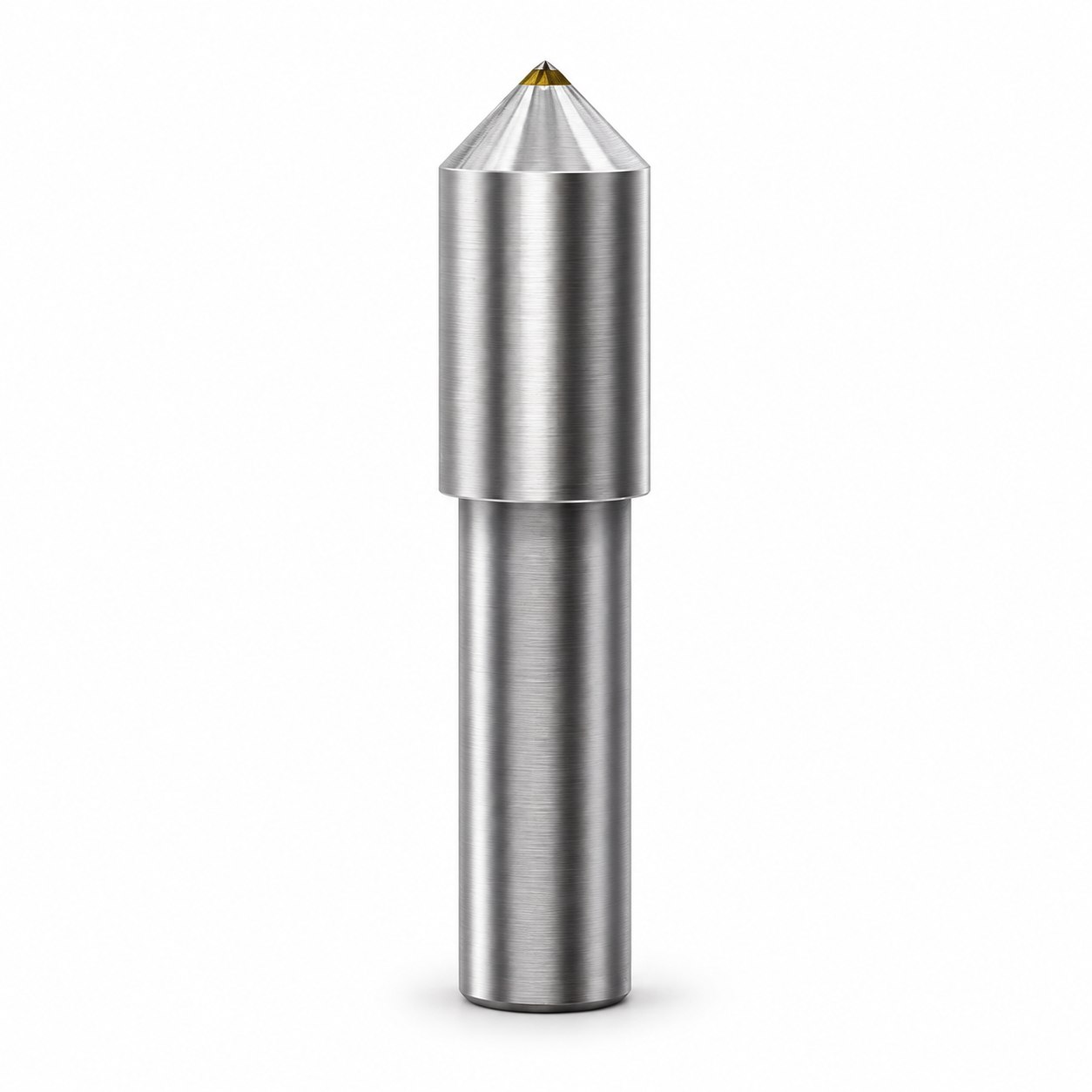
| Illustrated stepped version | 12 mm upper body / 10 mm lower shank | Image reference; confirm exact lengths |
| Stepped-shank options | 10 mm standard and 10 mm short version listed | Confirm required projection |
| Grinding-wheel diameter | Up to 600 mm | Source-listed range; verify application |
| Grinding-wheel grit | 60–180 | Source-listed range |
| Diamond size, grade and orientation | Not stated in supplied material | Must be confirmed before quotation |
Choose the Holder Style
Straight Shank
Use when the dresser holder accepts a uniform cylindrical body. Select the diameter to match the collet, clamp or dedicated dresser socket.
Listed diameters: 6 / 8 / 10 / 12 mm
Stepped Shank
Use when the mounting interface requires a smaller clamping shank with a larger supporting body or when machine clearance limits the projection.
Illustrated reference: 12 mm body / 10 mm shank
What the Dresser Does
True
Correct runout and restore a concentric, geometrically accurate wheel surface.
Dress
Remove loaded or glazed material and expose fresh abrasive cutting points.
Form
Generate simple straight faces, shoulders or profiles within the tool and machine capability.
Application and Compatibility Guide
| Application Question | Guidance |
|---|---|
| Which wheels? | Primarily for conventional abrasive grinding wheels when the wheel specification and dresser point are compatible. |
| Which operations? | Surface, cylindrical and general precision grinding-wheel truing or conditioning, subject to machine setup. |
| Which wheel states? | Useful when correcting runout, restoring form, exposing fresh grain or opening a loaded wheel face. |
| Diamond or CBN wheels? | Do not assume compatibility. Superabrasive wheels often require another dressing system; send the full wheel specification for review. |
| Production or manual use? | Can be used in a rigid machine-mounted holder. The exact holder, orientation and traverse method must follow the machine and process requirements. |
Selection Checklist
- Confirm wheel abrasive and bond
- Provide wheel diameter, width and grit
- Specify the profile to be dressed
- Match the shank to the machine holder
- Confirm available projection and clearance
- State wet or dry dressing conditions
- Share the required finish and cycle
- Confirm quantity and repeat-order plan
Recommended Setup Sequence
STEP 01
Inspect
Check the diamond point, holder, wheel guard, coolant and machine condition.
STEP 02
Clamp Rigidly
Minimize unsupported projection and match the shank to the approved holder.
STEP 03
Dress Gradually
Use controlled infeed and traverse settings specified for the wheel and machine.
STEP 04
Verify
Check wheel runout, profile, surface condition and the first ground components.
Common Dressing Problems
| Symptom | Items to Check |
|---|---|
| Chatter marks or an uneven wheel face | Dresser rigidity, excessive projection, holder condition, machine vibration and traverse stability. |
| Rapid diamond-point wear | Excessive infeed, shock contact, insufficient coolant, incorrect orientation or an unsuitable point specification. |
| Wheel remains glazed or loaded | Dressing depth, traverse rate, point condition and compatibility with the wheel bond and grit. |
| Profile or size is inconsistent | Wheel runout, holder repeatability, point wear, dresser position and the approved dressing cycle. |
Quality Confirmation Before Shipment
Specification Review
Confirm holder style, diameter, overall length, projection and application data against the quotation or drawing.
Visual and Dimensional Check
Check the exposed point condition, holder finish and specified dimensions before packing.
Traceable Identification
Product marking, batch records and inspection documentation can be discussed for repeat-order programs.
Customization and Ordering
Custom shank diameter, holder geometry, overall length and packaging can be reviewed when the required interface and grinding-wheel data are provided. Diamond size, quality and setting details should be confirmed in the commercial specification rather than inferred from the product photograph.
For repeat orders, send the approved drawing, previous item code or a measured sample together with the annual quantity.
Frequently Asked Questions
Is this dresser suitable for every grinding wheel?
No. Compatibility depends on the wheel abrasive, bond, grit, size and dressing objective. Provide the complete wheel marking before selection.
What is the difference between straight and stepped shanks?
The straight version has one uniform holder diameter. The stepped version uses a narrower clamping shank below a wider supporting body, which may suit a specific holder or clearance requirement.
Can it dress diamond or CBN grinding wheels?
Do not assume so. Superabrasive wheels often use specialized rotary, brake-controlled, vitrified, electroplated or other dressing systems. Send the wheel specification for review.
Which dimensions are required for a custom order?
Provide the shank diameter, body diameter where applicable, overall length, clamping length, required projection and any step lengths. A drawing is preferred.
What information helps diagnose short dresser life?
Send photos of the worn point, wheel marking, infeed and traverse data, coolant condition, holder setup, dressing frequency and the number of wheels dressed.
Related Dressing Solution
Diamond Rotary Dressing Wheel
For form dressing, controlled profiles or production processes requiring a rotary dressing system, compare our custom diamond rotary dressing wheel.
Send Your Grinding-Wheel Specification
Include the wheel abrasive, bond, diameter, width, grit, profile, machine model, dresser-holder dimensions, coolant condition, required finish and quantity. We will review the suitable holder and diamond-point specification before quotation.