A reliable CBN grinding wheel setup is not created by the wheel alone. The wheel, spindle, flange, workholding, coolant system, dressing unit and grinding parameters must work as one system. When any one of these elements is unstable, a premium wheel can still produce burn, chatter, loading or rapid profile loss.
This guide explains how to prepare an industrial CBN grinding process from mounting through trial approval. It is written for production engineers and buyers working with hardened steel, high-speed steel, bearing components, gears, shafts and selected heat-resistant alloys. For material and bond selection, see our separate CBN grinding wheel buyer guide.
Quick answer: confirm material compatibility, calculate wheel RPM from the approved surface speed, inspect the spindle and flanges, mount and balance the wheel, true it to restore geometry, dress or condition it according to the bond system, aim clean coolant into the grinding zone, and approve the process by measuring accepted parts rather than relying on a claimed life multiplier.
Why CBN grinding wheel setup is a system decision
CBN is a superabrasive with high wear resistance and better chemical stability than diamond in many ferrous-metal grinding conditions. That is why it is widely considered for hardened bearing steel, tool steel, high-speed steel and case-hardened components. It does not, however, make the rest of the grinding system less important. In fact, the long service potential and high dimensional stability of CBN often expose weaknesses that a conventional wheel previously masked.
Wheel imbalance can appear as chatter. A worn spindle or inaccurate flange can create runout. Poor coolant delivery can cause thermal damage even when the tank contains enough fluid. An incorrect dressing strategy can leave a vitrified wheel too closed to cut freely. A wheel intended for a stiff production grinder may also perform poorly on a machine with limited speed, power or dressing capability.
The practical objective is therefore not “make the wheel last as long as possible.” It is to maintain a sharp, geometrically stable cutting surface while producing acceptable parts at a predictable cost. Wheel life, cycle time, dimensional drift, dressing time, scrap and operator intervention should all be measured together.
Step 1: confirm the workpiece and wheel construction
Before installing a wheel, confirm the exact workpiece grade, hardness, heat treatment, coating, stock allowance and contact geometry. CBN is normally a starting point for hardened ferrous materials. Diamond is generally preferred for cemented carbide, technical ceramics, glass and silicon carbide. Softer or gummy steels may load a CBN wheel and can be more economical with aluminum oxide or ceramic alumina.
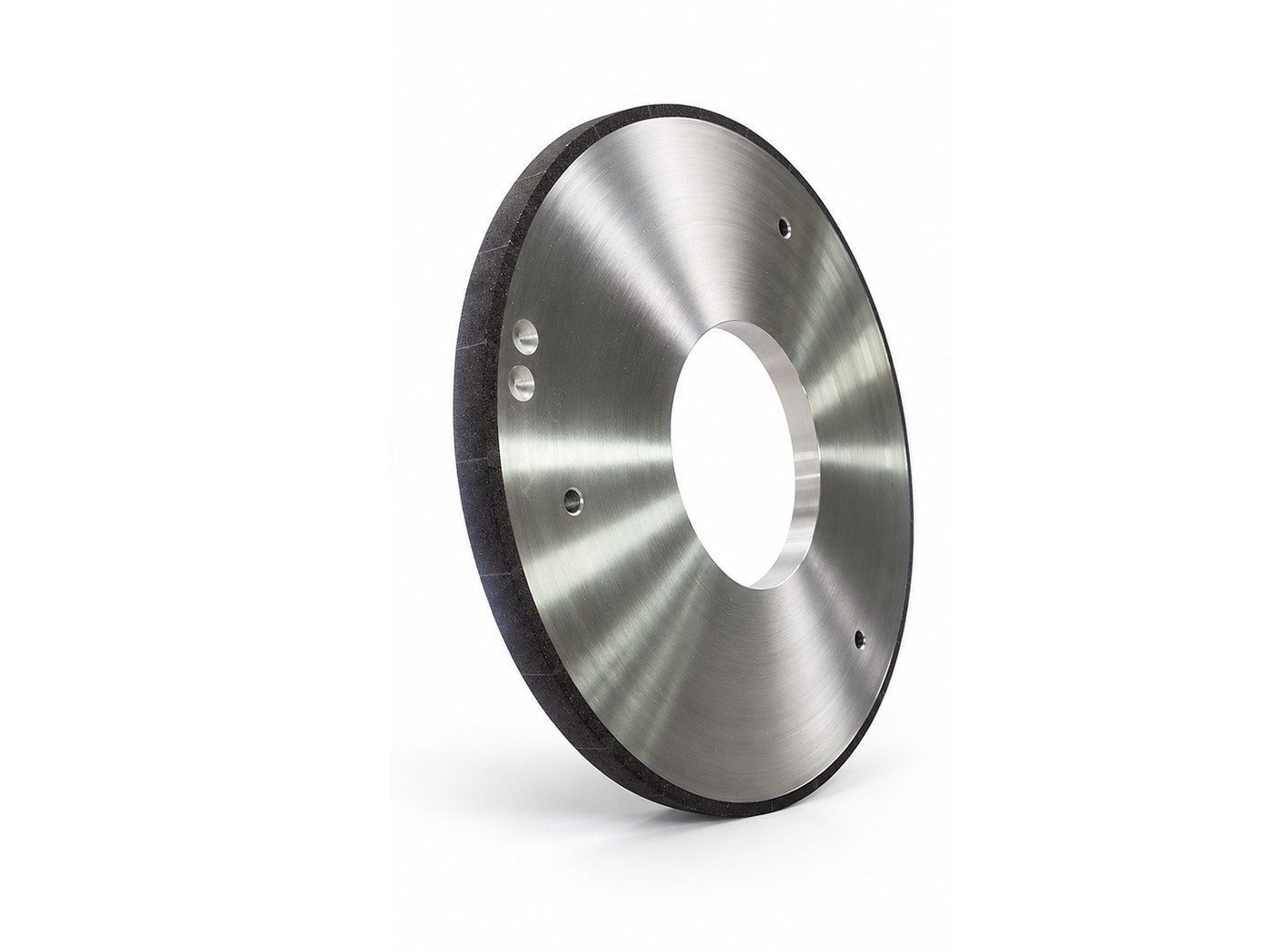
Next identify the wheel construction. Vitrified, resin, metal and electroplated CBN wheels are not maintained in the same way. A vitrified wheel can be engineered with porosity and is commonly trued and dressed for precision production. Resin bonds can provide a more compliant cutting action for tool grinding and related work. Metal bonds emphasize grain retention and form stability but can require specialized conditioning. Electroplated wheels carry a single abrasive layer on a metal core and are normally replaced or recoated after that layer is exhausted rather than conventionally dressed.
| Wheel construction | Typical setup priority | Conditioning approach |
|---|---|---|
| Vitrified CBN | Rigidity, coolant access, rotary dressing capability and profile control | True and dress with a compatible diamond system using supplier-developed parameters |
| Resin-bond CBN | Heat control, support, finish and bond protection | True and open the face with the method specified by the wheel manufacturer |
| Metal-bond CBN | Form retention, power, loading risk and available conditioning equipment | May require abrasive, rotary, electro-discharge or other specialized conditioning |
| Electroplated CBN | Core accuracy, mounting runout and chip clearance | Usually not conventionally dressable; avoid removing the plated abrasive layer |
Step 2: check machine and spindle readiness
There is no universal minimum spindle speed, coolant flow or runout value for every CBN wheel. Statements such as “the spindle must exceed 4,500 rpm” are incomplete because required RPM changes with wheel diameter and target surface speed. Machine approval should instead be based on the actual wheel, process and manufacturer limits.
- Speed capability: the spindle must reach the required operating range without exceeding the maximum speed marked for the wheel, flange or machine.
- Power and torque: the spindle must maintain speed under the expected material-removal load.
- Rigidity: inspect spindle bearings, slides, workholding and dressing-unit stiffness.
- Runout: measure radial and axial runout at the relevant mounting surfaces; do not assume a new wheel will correct an inaccurate arbor or flange.
- Balance: use the balancing method specified for the wheel and machine, especially for high-speed production grinding.
- Guarding and safety: confirm wheel guards, flange dimensions, mounting instructions and all machine safety interlocks before operation.
Norton’s diamond and CBN mounting, truing and dressing guide begins with inspection of the spindle and flanges because mounting accuracy determines what can be achieved later by truing and dressing. A damaged flange, contaminated mounting face or worn spindle should be corrected before a process trial.
Step 3: calculate RPM from surface speed
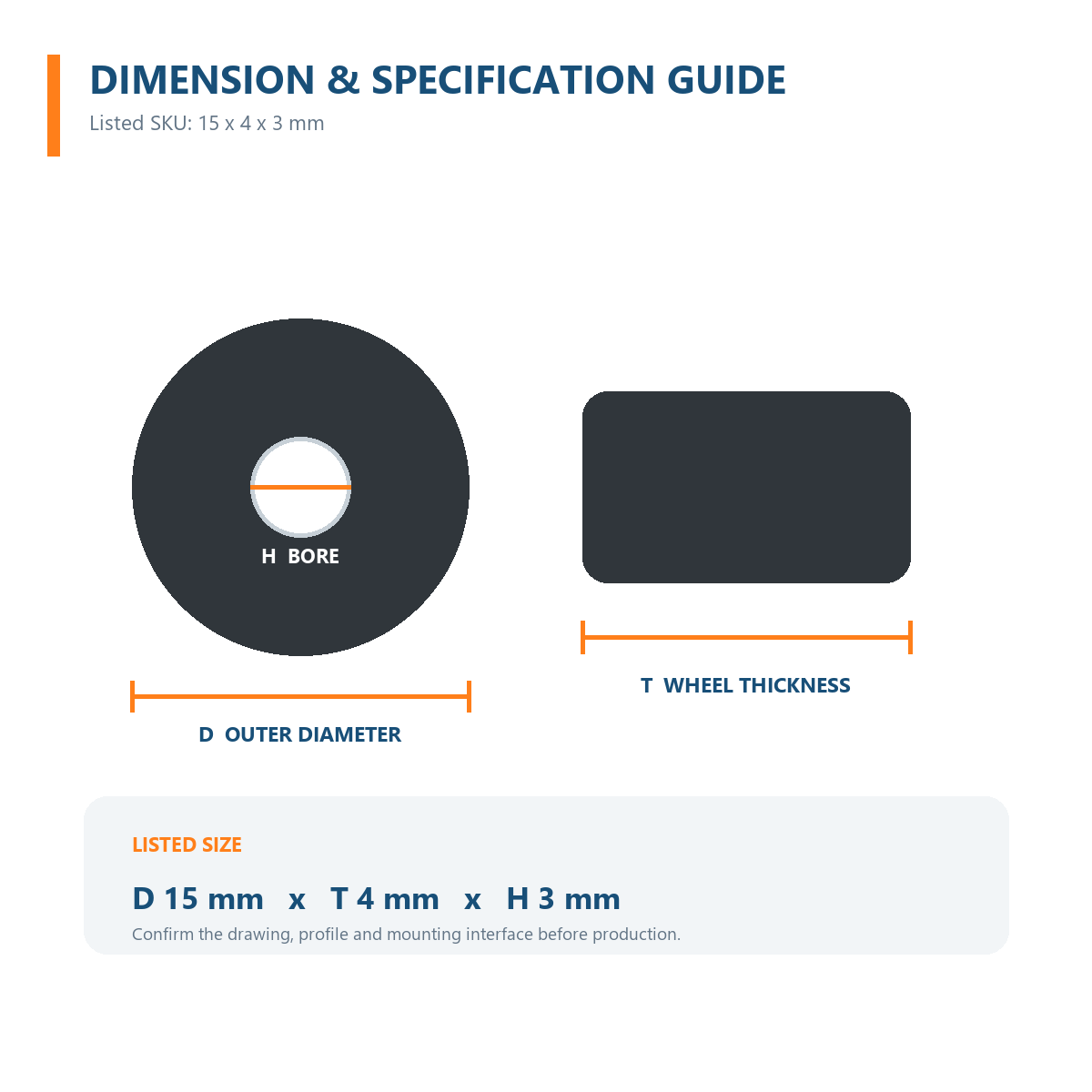
CBN wheel recommendations are often stated as peripheral or surface speed, while a machine controller may require RPM. Use the following relationship when wheel diameter is in millimetres and surface speed is in metres per second:
RPM = surface speed × 60,000 ÷ (π × wheel diameter)
For example, a 300 mm wheel running at 60 m/s would require approximately 3,820 rpm. This calculation is only a conversion, not a speed recommendation. The approved operating speed must come from the wheel specification and must remain within the limits of the wheel, flange, spindle and machine. Recalculate RPM as the wheel diameter changes through use or dressing when the process requires a constant surface speed.
Step 4: mount, balance and true the wheel
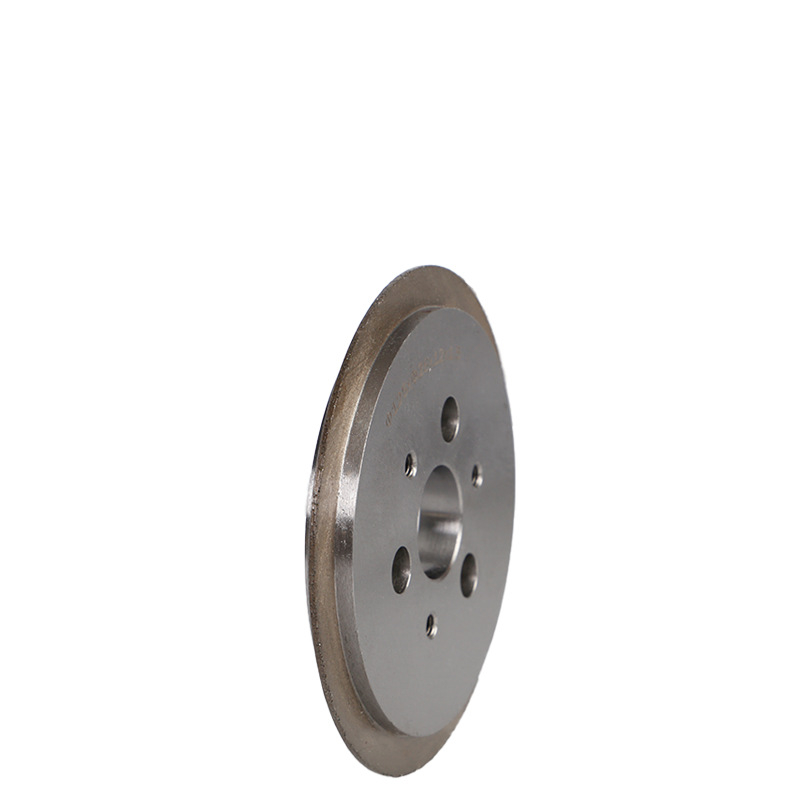
Clean the spindle taper or arbor, flange faces, blotters or adapters specified by the manufacturer and the wheel bore. Inspect for burrs, damage and contamination. Mount the wheel with the correct flange system and tightening procedure. Excessive force can damage a wheel or distort a hub; insufficient or uneven clamping can allow movement. Follow the machine and wheel manufacturer’s instructions rather than applying a generic torque value.
Balancing reduces centrifugal force variation and helps protect surface quality and spindle life. Truing is the separate operation that makes the working surface concentric with the spindle and restores the required profile. A wheel can be balanced but not true, or true but poorly balanced. Both conditions must be controlled.
For vitrified CBN form grinding, the condition and alignment of the rotary diamond dresser are especially important. Norton’s gear-grinding guidance notes that dresser alignment and rotary-unit condition affect wheel chipping, dressing allowance and the profile transferred to the workpiece. Vibration from worn dressing-unit bearings can be reproduced in the wheel face and then in the finished part.
Step 5: distinguish truing from dressing
Truing restores wheel geometry, concentricity and profile. Dressing or conditioning creates the cutting topography by exposing abrasive and opening chip space. Treating these as the same task is a common cause of poor results. A wheel can look geometrically correct after truing but still feel smooth, generate high power and burn parts because the bond has not been opened sufficiently.
Dressing parameters control the balance between cutting freedom and finish. A more open surface can reduce grinding force and heat but may produce a rougher finish or higher initial wear. A closed surface can improve finish under the right load but may glaze and raise grinding energy. Feed, infeed, dresser speed ratio, overlap, direction and spark-out should be developed for the specific wheel and operation.
Do not copy one supplier’s dressing values into a different wheel simply because both products are described as vitrified CBN. Bond formulation, grain size, concentration, pore structure, profile and abrasive-layer depth can all change the correct setting. Research on porous vitrified CBN structures also shows why pore design and bond characteristics affect chip accommodation and grinding behaviour.
Step 6: deliver clean coolant to the grinding zone
Coolant performance is determined by delivery, not tank volume alone. The jet must reach the wheel–workpiece interface before the air barrier around the rotating wheel deflects it. Nozzle position, jet coherence, flow, pressure, wheel speed and guard geometry should be considered together. A large pump cannot compensate for a dispersed jet aimed away from the contact zone.
Filtration is equally important. Recirculated swarf can scratch finished surfaces, load the wheel and shorten coolant life. Monitor concentration, temperature and contamination according to the fluid supplier’s instructions. When changing from a conventional abrasive process to CBN, record the coolant type and condition as part of the trial rather than changing both wheel and fluid without a baseline.
Dry grinding is possible in selected resin-bond tool-grinding and sharpening applications, but it should never be assumed to be safe for a process developed for wet grinding. Bond system, wheel speed, contact area, stock removal and workpiece thermal sensitivity determine whether dry operation is realistic.
Step 7: establish a controlled first-grind trial
Start with the wheel supplier’s recommended operating window and the machine builder’s limits. Record wheel speed, work speed, feed, infeed, stock removal, dressing parameters, coolant condition, spindle load and part temperature. Change one important variable at a time. If several parameters change simultaneously, a good result cannot be reproduced and a poor result cannot be diagnosed.
Inspect parts from the beginning, middle and end of the trial. Depending on the application, approval may include size, roundness, profile, roughness, waviness, edge condition, metallurgical burn inspection and residual stress. A visually smooth surface is not proof that the part is free from thermal damage.
| Record | Why it matters |
|---|---|
| Spindle power or load trend | Rising load can reveal glazing, loading or coolant loss before a visible defect appears |
| Parts between dressings | Shows how long geometry and cutting condition remain stable |
| Dimensional drift | Separates wheel wear from random inspection results |
| Accepted parts per wheel | More useful than total parts when scrap differs |
| Cycle and dressing time | Connects technical performance to production output |
| Scrap and rework | Required for a realistic cost-per-part comparison |
CBN grinding wheel troubleshooting guide
| Symptom | Likely checks | First corrective direction |
|---|---|---|
| Burn or discoloration | Wheel sharpness, dressing condition, infeed, coolant aim, filtration and contact length | Restore cutting condition and coolant access before simply reducing feed |
| Chatter or waviness | Balance, mounting runout, spindle bearings, workholding, dresser vibration and speed relationships | Identify the vibration source; do not attempt to dress out a mechanical problem |
| Wheel loading | Workpiece hardness and ductility, pore structure, chip clearance, coolant and dressing openness | Open the wheel appropriately or reconsider whether CBN suits the material |
| Rapid wheel wear | Bond strength, impact, interrupted cut, excessive dressing and speed | Review wheel construction and dressing allowance with the supplier |
| Poor profile retention | Truing accuracy, dresser condition, bond choice, layer geometry and machine rigidity | Measure the wheel profile and dresser system before changing grit size |
| Good finish but high power | Glazing, overly closed dressing and coolant delivery | Condition the wheel for a freer cut while monitoring finish |
Where CBN setup discipline creates the most value
Production grinding of crankshafts, camshafts, gears, bearing races and hardened shafts can benefit from long dressing intervals and consistent geometry, but these applications also magnify small errors in balance, dressing and coolant delivery. Tool grinding of HSS drills, broaches and shear blades places different emphasis on edge quality, profile and dry-versus-wet capability. Selected nickel- and cobalt-based alloys can be suitable for application-specific CBN systems, but alloy chemistry and surface-integrity requirements must be reviewed individually.
Titanium, silicon carbide wafers and cemented carbide should not be grouped into a generic “CBN application” list. Titanium grinding is highly process-dependent, while carbide, ceramics and SiC normally point toward diamond. Separating these materials prevents a broad marketing claim from turning into an expensive trial on the wrong abrasive.
Information to include in a CBN grinding wheel RFQ
- Workpiece material, grade, hardness, heat treatment and coating
- Grinding operation, contact geometry, stock allowance and batch volume
- Required dimensions, tolerance, profile, roundness and surface finish
- Existing wheel code, shape, dimensions, layer geometry and current problem
- Machine make and model, spindle power, RPM range and mounting details
- Coolant type, concentration, filtration, nozzle arrangement and dry/wet condition
- Truing and dressing equipment, dresser type, parameters and frequency
- Current cycle time, parts between dressings, accepted parts per wheel and scrap
- Inspection method for burn, residual stress, roughness and geometry
A complete RFQ allows the supplier to engineer a starting specification instead of guessing from a photograph. Buyers comparing CBN grinding wheels should ask how the proposed abrasive, bond, pore structure and dressing strategy fit the actual machine and workpiece.
Frequently asked questions
Do all CBN grinding wheels need dressing?
No. Dressable vitrified, resin and metal systems may require different truing and conditioning procedures. Electroplated single-layer wheels are generally not conventionally dressed because removing the plated working layer damages the tool. Always follow the wheel manufacturer’s method.
Can I use a fixed RPM for every wheel diameter?
No. RPM and surface speed are linked to wheel diameter. Calculate RPM for the required surface speed and confirm that it is below every applicable wheel, flange, spindle and machine limit.
Why does a newly trued CBN wheel still burn parts?
Truing can restore geometry without creating an open cutting surface. The wheel may still need conditioning, or the coolant jet, infeed, contact length and wheel specification may be unsuitable. Check spindle load and the wheel face rather than assuming that roundness alone means the wheel is ready.
Should I choose CBN based on wheel life?
Wheel life is only one measure. Compare accepted parts, dressing time, cycle time, dimensional stability, surface integrity, scrap, changeover time and operator intervention. Cost per accepted part is a better purchasing metric than the lowest wheel price or the highest claimed life.
Conclusion
A disciplined CBN grinding wheel setup can transform a stable hardened-steel grinding process, but the wheel cannot compensate for an inaccurate spindle, unsuitable construction, poor dressing or weak coolant delivery. The best results come from treating it as one engineered component in a complete grinding system.
Start with verified workpiece data, calculate speed correctly, prepare the machine, separate truing from dressing and approve the process with measured production results. That disciplined approach is more credible—and more profitable—than promising a universal three-times efficiency gain or a fixed life multiplier.
Discuss your CBN grinding application
Need a starting specification for a replacement or custom CBN wheel? Send the material grade and hardness, wheel dimensions, machine and RPM, coolant and dressing method, stock allowance, tolerance, surface-finish target and current defect. Request a technical review and quotation.