The cylindrical grinding process is mainly used for precision grinding of end faces, outside diameters and tapered surfaces on shaft-type parts in batch production. It is widely used for automotive engine components and is also suitable for small-batch, high-accuracy shaft machining in aerospace, defense and general precision-engineering workshops. Typical applications include top rollers for spinning, drawing, combing and texturing machines in the textile industry; rubber rollers for fax machines, copiers, printers and plotters; and rollers used in automatic conveying equipment for printing, food and pharmaceutical production, as well as plastic processing.
External cylindrical grinding machines are common in manufacturing, but the grinding wheel must be matched carefully to the workpiece. The correct abrasive, grit size, wheel grade and bond directly affect dimensional accuracy, surface finish, grinding efficiency and wheel life. Before selecting a wheel, confirm the workpiece material and hardness, stock-removal allowance, required finish, contact width, coolant condition and machine speed. For a broader introduction to abrasive choices, see our guide to grinding wheel abrasive materials.
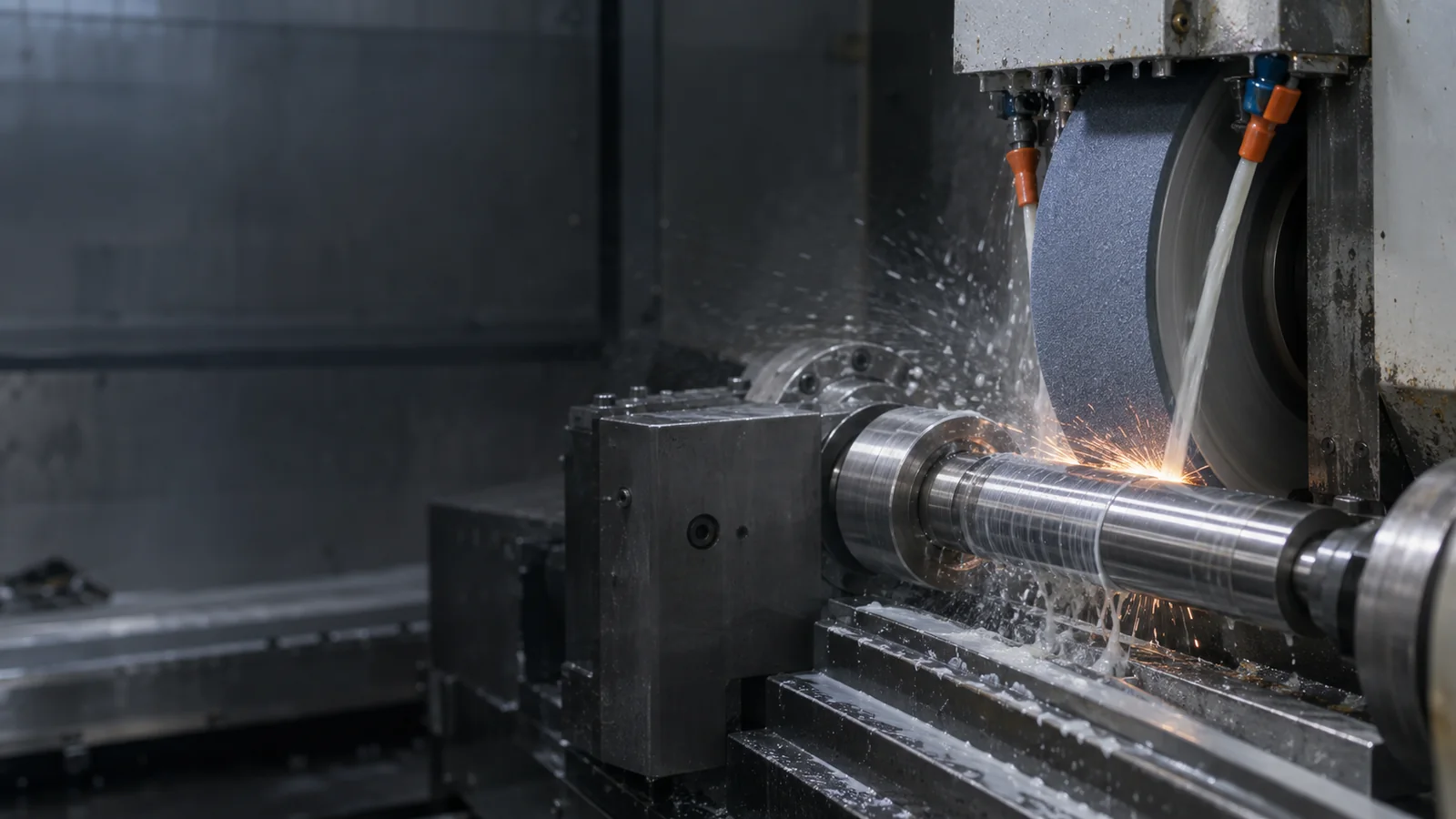
1. Selecting the Abrasive for Cylindrical Grinding
For hardened or unhardened steel rolls, aluminum oxide grinding wheels are generally used. Chilled cast-iron rolls, rubber rolls, copper rolls and granite rollers are normally ground with silicon carbide wheels. Different steel grades also require suitable aluminum oxide abrasives to obtain higher grinding accuracy and better surface quality. Chrome corundum (PA) wheels are suitable for alloy-steel rolls, zirconia alumina (ZA) wheels for heat-resistant alloy-steel rolls, and single-crystal alumina (SA) wheels for stainless-steel rolls.
Abrasive selection determines how efficiently the wheel cuts and how much heat is generated at the grinding zone. An abrasive that is unsuitable for the workpiece may rub instead of cut, causing loading, rapid dulling, burn marks or poor surface finish. The same material name can cover different hardness levels and heat-treatment conditions, so the final choice should be verified against the actual part, coolant and grinding cycle. When the application involves very hard ferrous materials and demands longer wheel life, a vitrified CBN cylindrical grinding wheel may also be evaluated.
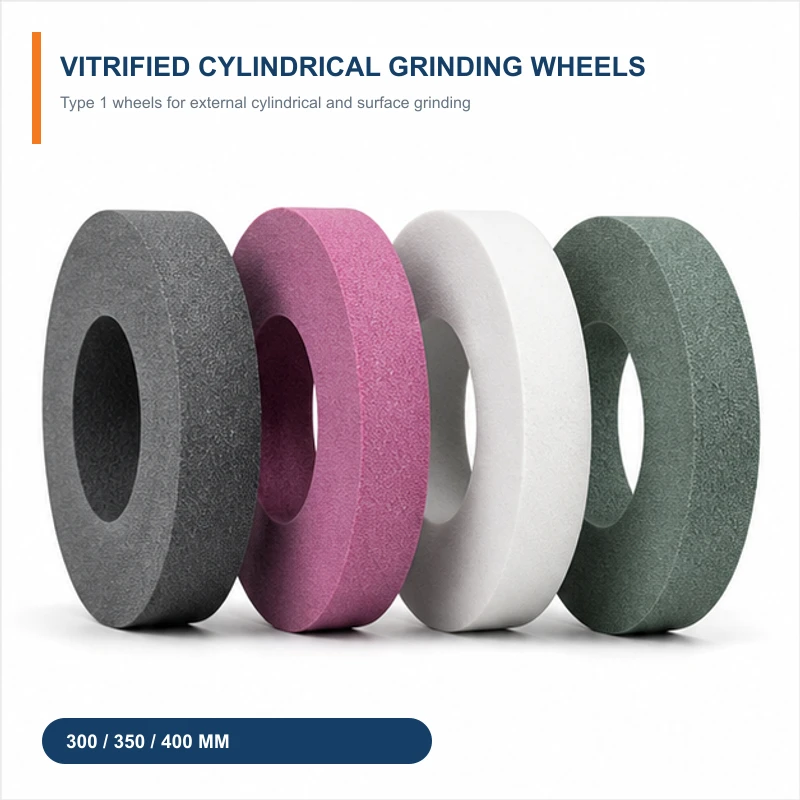
2. Selecting the Grinding Wheel Grit Size
For rough grinding, use a coarse grit wheel in the 24–60 range. For finish grinding, use a finer grit in the 60–100 range. A 150-grit wheel is suitable for precision grinding. For ultra-fine or mirror grinding, micron-grade wheels in the W63–W14 range are generally used.
Coarser grits provide larger chip spaces and are better suited to higher stock removal, but they leave a rougher finish. Finer grits provide more cutting points and can improve surface quality, although they may load more easily and generate additional heat if the wheel, feed or dressing condition is unsuitable. The chosen grit should therefore balance material-removal rate, target roughness and dimensional tolerance. For an unfamiliar part, begin with a conservative specification and confirm the result through a controlled trial before running a full production batch.
3. Selecting the Grinding Wheel Grade
The harder the roll surface, the softer the grinding wheel grade should generally be. Wheel grade describes how strongly the bond holds the abrasive grains; it does not mean the abrasive grain itself is softer. A softer grade releases dull grains more readily and exposes fresh cutting edges, which helps reduce rubbing and thermal damage when grinding a hard workpiece.
(1) When the Grinding Wheel Wears Too Quickly
If the wheel wears too quickly, the wheel selected for that particular roll is probably too soft. The following adjustments may improve the result:
- Increase the peripheral speed of the grinding wheel.
- Increase the longitudinal feed rate of the table so that the table feed per workpiece revolution reaches approximately two-thirds to three-quarters of the wheel width.
- Reduce the rotational speed of the roll.
After each adjustment, observe wheel wear, part size, surface finish and grinding temperature rather than changing several variables at once. If these measures do not produce a clear improvement, the wheel is too soft for the application and a harder wheel grade should be selected. Confirm that excessive wear is not being caused by insufficient wheel speed, incorrect dressing, vibration or an unstable coolant supply before changing the specification.
(2) When the Grinding Wheel Loads or Causes Grinding Burns
If the wheel is obviously struggling during roll grinding, becomes heavily loaded, fails to release dull abrasive grains, holds grinding swarf, or produces burns and scoring on the roll surface, the selected wheel is probably too hard. The following measures may improve the condition:
- Reduce the peripheral speed of the grinding wheel.
- Increase the rotational speed of the roll.
- If these adjustments still do not produce a clear improvement, select a softer grinding wheel grade.
- Choose the bond according to the grinding requirement. Resin-bond wheels are used for mirror grinding of roll surfaces, while vitrified wheels are generally preferred for other grinding operations.
Wheel loading and burn can also be intensified by a dull or incorrectly dressed wheel, restricted coolant flow, excessive infeed, poor machine rigidity or an overly fine grit. Check these process conditions before concluding that the wheel grade alone is responsible. A short documented test—recording wheel specification, dressing parameters, workpiece speed, wheel speed, feed, coolant and achieved roughness—makes future selection more reliable.
During every cylindrical grinding process, operate the wheel within the machine and wheel manufacturer’s speed limits, inspect it before mounting, use the correct guards and flanges, and follow applicable safety procedures. The OSHA abrasive-wheel machinery requirements provide a useful safety reference.
A successful wheel specification is the result of matching the abrasive, grit size, grade and bond to the actual workpiece and production target. If material hardness, removal allowance or surface-finish requirements change, review the wheel specification instead of relying on the previous setup. This systematic approach helps the cylindrical grinding process achieve stable accuracy, fewer burns, predictable wheel life and consistent batch-to-batch quality.
Share this article: