Grinding wheel conditioning normally involves two related operations: truing and dressing. Truing restores the wheel’s geometry, profile and concentricity. Dressing restores the cutting condition of the wheel face by exposing abrasive grains, removing loading and creating the required chip space.
For conventional aluminum oxide and silicon carbide wheels, one dressing operation often performs both functions. Diamond and CBN grinding wheels are harder and more bond-dependent, so truing and dressing may require separate tools and process stages.
This guide explains the main grinding wheel dressing methods, their technical differences and how to select a suitable grinding wheel dresser.
What Is the Difference Between Truing and Dressing?
Although the terms are frequently used together, truing and dressing solve different grinding problems.
Grinding Wheel Truing
Truing corrects the macro-geometry of the grinding wheel. Its main purposes are to:
- Make the wheel concentric with the spindle axis
- Remove radial and axial runout
- Restore a flat, tapered or profiled wheel face
- Correct profile loss caused by wheel wear
- Produce the geometry that will be transferred to the workpiece
If a grinding wheel is out of round or has lost its required profile, it needs truing.
Grinding Wheel Dressing
Dressing controls the micro-condition of the wheel surface. Its purposes are to:
- Remove loaded workpiece material
- Remove or fracture dull abrasive grains
- Expose fresh cutting points
- Remove part of the bond around the abrasive grains
- Create sufficient chip-clearance space
- Adjust the wheel face for the required removal rate and surface finish
If the wheel remains geometrically correct but starts generating excessive heat, grinding force, chatter or burn, it may need dressing rather than major truing.
Three Main Grinding Wheel Dressing Methods
For practical industrial selection, mechanical dressing and truing methods can be grouped into three main families: stationary diamond dressing, rotary dressing and abrasive conditioning.
| Method | Typical tools | Main advantage | Typical applications |
|---|---|---|---|
| Stationary dressing | Single-point or multi-point diamond dresser | Flexible, economical and easy to apply | Conventional wheels, straight faces and simple profiles |
| Rotary dressing | Rotary diamond roll, disc or form roll | High profile accuracy and repeatability | Form grinding, automotive production and high-volume grinding |
| Abrasive conditioning | Silicon carbide or aluminum oxide wheel or dressing stick | Effective for opening and conditioning superabrasive wheels | Diamond and CBN wheels, especially after truing |
1. Stationary Diamond Dressing
A stationary diamond tool acts like a small cutting tool against the rotating grinding wheel. It can traverse across the wheel face or plunge into the wheel to generate a defined profile.
Common tools include:
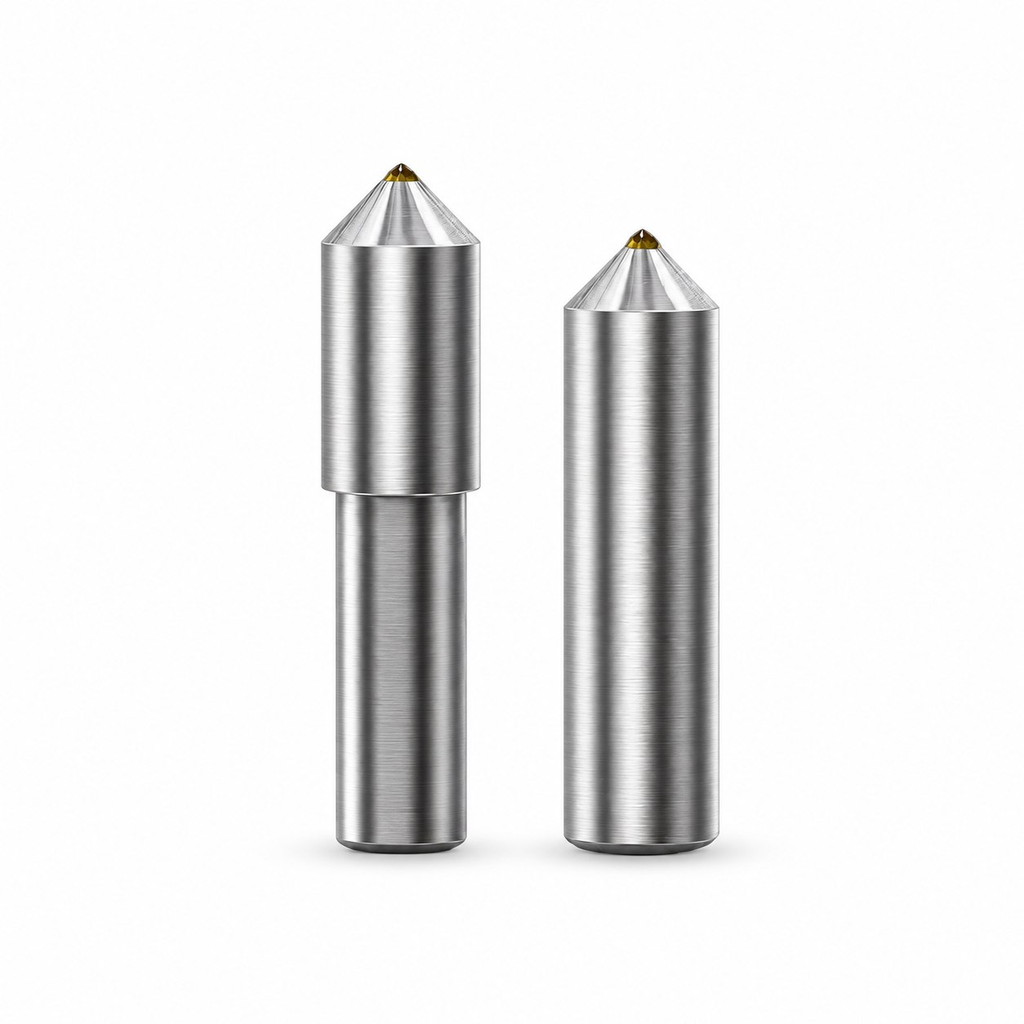
- Single-point diamond dressers
- Multi-point diamond dressers
- Impregnated diamond dressers
- Blade-type dressing tools
- Profile diamond dressers
A single-point diamond dresser is widely used for conventional vitrified grinding wheels because it is simple, flexible and cost-effective. It is particularly suitable for straight wheels, cylindrical grinding wheels and relatively simple profiles.
The diamond size, tool orientation, traverse rate and infeed must match the wheel diameter, abrasive size, bond and required finish.
2. Rotary Diamond Dressing
A rotary diamond dresser rotates while contacting the grinding wheel. Depending on the machine and application, it may operate in traverse, plunge, form-roll or crush-dressing mode.
Rotary dressing is preferred when the process requires:
- Repeatable complex profiles
- Short dressing cycles
- High-volume production
- Consistent part geometry
- Controlled dressing speed ratios
- Better distribution of dresser wear
A rotary diamond dresser generally provides higher profile consistency than a single-point tool. It is widely used in automotive, bearing, gear, aerospace and precision form-grinding applications.
The main disadvantages are higher initial tooling cost, greater machine-system requirements and the need to control dresser speed, direction and alignment.
3. Abrasive-Wheel and Dressing-Stick Methods
Abrasive conditioning uses a silicon carbide, aluminum oxide or other specified abrasive tool against the grinding wheel.
This method is especially important for diamond and CBN grinding wheel dressing because truing a superabrasive wheel may leave the abrasive grains and bond material at nearly the same level. The wheel can be geometrically accurate but still too closed or glazed to cut efficiently.
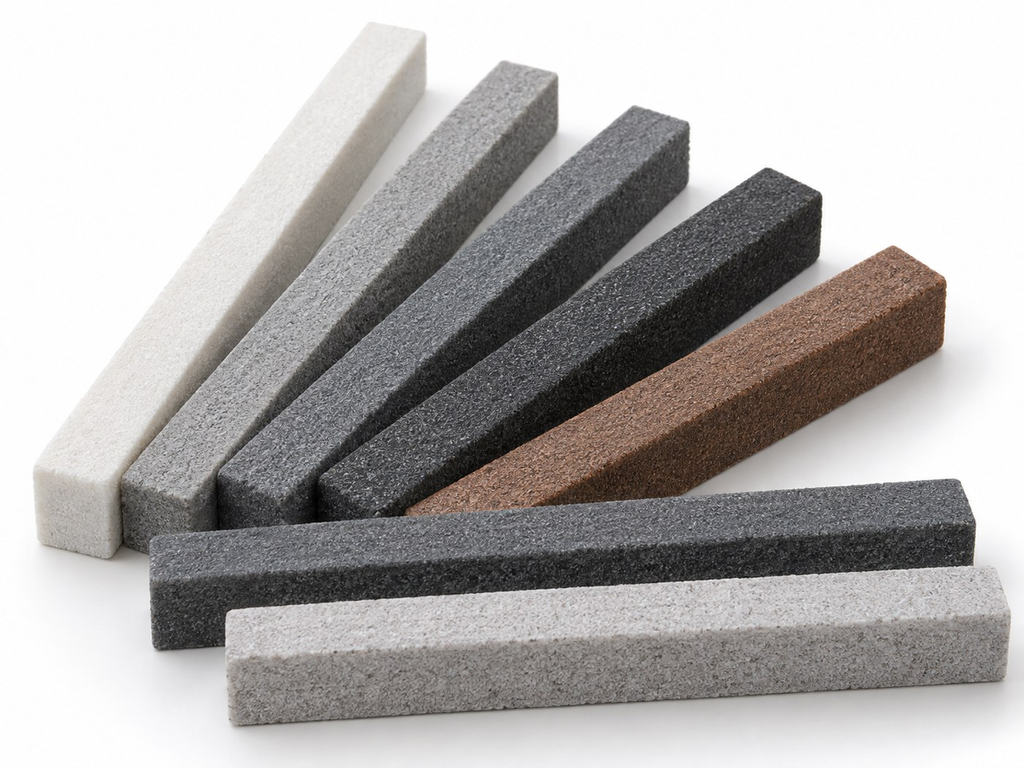
A dressing stick or abrasive wheel removes some of the surrounding bond and exposes the superabrasive grains.
Typical tools include:
- Aluminum oxide dressing sticks
- Silicon carbide dressing sticks
- Brake-controlled truing wheels
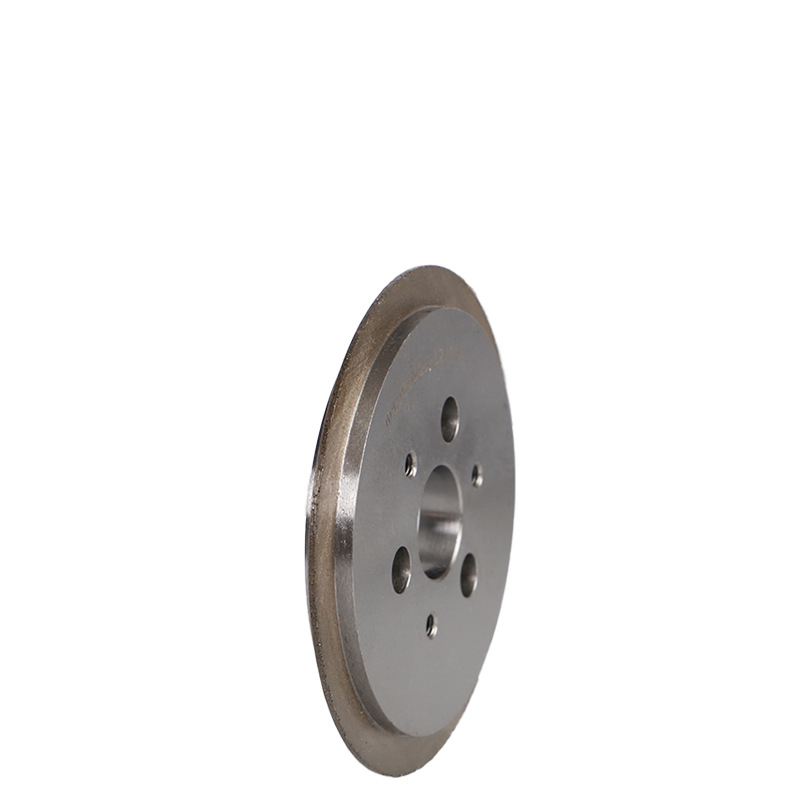
- Powered abrasive truing wheels
- Abrasive discs or cups
- Mild-steel rollers for selected wheel constructions
The correct abrasive type, grit size and hardness must be selected according to the wheel abrasive and bond system.
Conventional vs Diamond and CBN Grinding Wheels
The appropriate dressing process depends heavily on whether the grinding wheel uses conventional or superabrasive grains.
| Factor | Conventional grinding wheels | Diamond and CBN grinding wheels |
|---|---|---|
| Typical abrasive | Aluminum oxide or silicon carbide | Diamond or cubic boron nitride |
| Dressing difficulty | Relatively low | Higher and strongly bond-dependent |
| Truing and dressing | Frequently completed in one operation | Often performed as separate stages |
| Common tool | Single-point or multi-point diamond dresser | Rotary dresser, abrasive truing wheel and dressing stick |
| Profile control | Stationary or rotary dresser | Usually powered or rotary system for demanding profiles |
| Grain exposure | Often produced during normal dressing | May require a separate sharpening or conditioning step |
Our conventional grinding wheel range and diamond and CBN grinding wheels therefore require different dressing strategies.
How to Dress Diamond and CBN Grinding Wheels
There is no universal method for every superabrasive wheel. When dressing CBN grinding wheels or diamond grinding wheels, the correct procedure depends on the abrasive, bond, wheel construction, profile and machine capability. Truing establishes geometry; a separate dressing or sharpening step may then open the wheel face.
Resin-Bond Diamond and CBN Wheels
Resin-bond wheels are often trued with a brake-controlled abrasive wheel, powered truing device or another procedure specified by the wheel manufacturer.
After truing, an aluminum oxide or silicon carbide dressing stick may be used to remove bond material and expose the cutting grains.
Vitrified-Bond CBN Wheels
Vitrified CBN wheels can often be trued and dressed with a rotary diamond disc or roll. Some wheel constructions may also accept a properly selected stationary diamond dressing tool.
Rotary dressing is normally preferred when profile accuracy, production repeatability and controlled wheel topography are important.
Metal-Bond Superabrasive Wheels
Metal-bond diamond and CBN wheels hold their form well but are comparatively difficult to dress mechanically.
Depending on the application, possible methods include:
- Brake-controlled abrasive-wheel truing
- Silicon carbide wheel truing
- Abrasive-stick conditioning
- Mild-steel contact truing
- Electrical discharge dressing for suitable conductive bonds
- Electrolytic or other specialized conditioning processes
These methods are not interchangeable. The wheel supplier and machine capability should be confirmed before choosing a process.
Electroplated and Single-Layer Wheels
Electroplated grinding wheels contain a single abrasive layer and generally cannot be dressed like multilayer resin-, vitrified- or metal-bond wheels.
If the abrasive layer is worn, damaged or severely loaded, aggressive dressing can permanently remove the working layer. Cleaning, replating or wheel replacement may be required instead.
How to Select a Grinding Wheel Dresser
A grinding wheel dresser should be selected according to five variables:
- Abrasive type — aluminum oxide, silicon carbide, diamond or CBN
- Bond system — vitrified, resin, metal or electroplated
- Wheel profile — straight, angled, radius or complex form
- Production volume — prototypes, small batches or continuous production
- Accuracy requirement — general grinding, precision grinding or form grinding
A practical selection matrix is shown below.
| Wheel and application | Recommended starting method |
|---|---|
| Conventional vitrified wheel with a straight face | Single-point or multi-point diamond dresser |
| Conventional wheel with a complex profile | Rotary form dresser or profile diamond tool |
| High-volume form grinding | Rotary diamond roll or disc |
| Resin-bond diamond or CBN wheel | Powered abrasive truing followed by dressing-stick conditioning |
| Vitrified CBN wheel with a precision profile | Rotary diamond dressing system |
| Metal-bond superabrasive wheel | Bond-specific mechanical or electrical dressing process |
| Electroplated single-layer wheel | Cleaning or replacement rather than conventional dressing |
The final method should always be confirmed against the wheel specification, machine stiffness, spindle condition, coolant system and required workpiece tolerance.
Dressing Parameters and Grinding Performance
The dressing tool alone does not determine the result. Dressing infeed, traverse speed, speed ratio and tool condition directly affect the wheel topography.
More Aggressive Dressing
Deeper infeed or faster traverse generally creates a more open wheel face.
This usually provides:
- More exposed cutting points
- Lower grinding power
- Higher material-removal capability
- Better chip clearance
- A rougher workpiece finish
Finer Dressing
Shallower infeed and slower traverse generally create a denser or more closed wheel face.
This usually provides:
- More cutting points in contact
- A finer workpiece finish
- Lower surface roughness
- Higher grinding forces if the wheel becomes too closed
- Greater risk of heat generation if dressing is insufficient
The objective is not simply to make the wheel as sharp as possible. The wheel face must be matched to the required balance of removal rate, surface finish, power consumption and workpiece integrity.
When Should a Grinding Wheel Be Dressed?
Common indicators include:
- Increasing spindle power
- Grinding burn or discoloration
- Deteriorating surface finish
- Higher grinding forces
- Wheel loading or glazing
- Loss of dimensional accuracy
- Profile or form error
- Chatter marks
- Unstable cycle time
- Increased vibration or noise
A fixed dressing interval may be adequate for a stable production process. For precision grinding, dressing decisions can also use spindle power, dimensional feedback and acoustic emission signals.
Research continues to develop acoustic-emission monitoring and signal-processing methods for wheel wear, burn detection and dressing control. These systems improve process visibility, but they do not eliminate the need to select the correct dressing tool and process parameters. Recent research reviews AE-assisted grinding monitoring and closed-loop control.
Common Grinding Wheel Dressing Mistakes
Avoid these common problems:
- Treating truing and dressing as identical operations in every application
- Using a conventional-wheel procedure on a diamond or CBN wheel
- Using a worn diamond dressing tool
- Ignoring dresser runout and alignment
- Applying excessive dressing depth
- Dressing an electroplated wheel like a multilayer wheel
- Selecting the dresser without checking the wheel bond
- Continuing to grind after the wheel becomes loaded
- Assuming that a geometrically true wheel is automatically sharp
- Changing dressing parameters without checking surface finish and spindle power
Frequently Asked Questions
Is grinding wheel dressing the same as making a wheel flat?
No. Truing restores wheel geometry, concentricity and profile. Dressing restores or modifies the condition of the grinding face. A wheel can be geometrically true but still glazed and unable to cut efficiently.
What is the most common grinding wheel dresser?
A single-point diamond dresser is one of the most common tools for conventional vitrified grinding wheels. It is economical and flexible for straight faces and simple profiles.
When should a rotary diamond dresser be used?
A rotary diamond dresser is suitable for complex profiles, high-volume production and processes requiring repeatable wheel geometry. It is commonly used in precision form grinding.
Can a single-point diamond dresser be used on a CBN wheel?
It may be suitable for certain vitrified CBN wheel systems, but it is not a universal solution. CBN wheel dressing depends on the bond, wheel construction and machine. Many resin- and metal-bond wheels require powered abrasive truing followed by dressing-stick conditioning.
Can a diamond dresser be used to true a diamond grinding wheel?
It should not be assumed. Diamond-on-diamond contact can produce poor truing performance and excessive dresser wear. Many diamond wheels are trued with silicon carbide or aluminum oxide wheels, brake-controlled devices or other bond-specific methods.
Do diamond and CBN wheels need dressing after truing?
Often, yes. Truing can restore the wheel geometry while leaving the wheel face closed or glazed. A separate dressing or sharpening step exposes the grains and creates chip-clearance space.
Can electroplated grinding wheels be dressed?
Single-layer electroplated wheels are generally not dressed by removing the wheel surface. Aggressive dressing can destroy the abrasive layer. Cleaning, replating or replacement may be required.
Request a Dressing Tool Recommendation
To select the correct diamond dressing or honing tool, provide:
- Grinding wheel abrasive
- Bond type
- Wheel diameter and width
- Grit size
- Wheel profile
- Machine and spindle speed
- Workpiece material
- Coolant condition
- Required tolerance
- Target surface finish
- Current dressing method and problem
Wewin Abrasives can evaluate stationary diamond dressers, rotary dressing tools and customized dressing solutions according to your wheel specification and grinding process.
Share this article:
3 comments